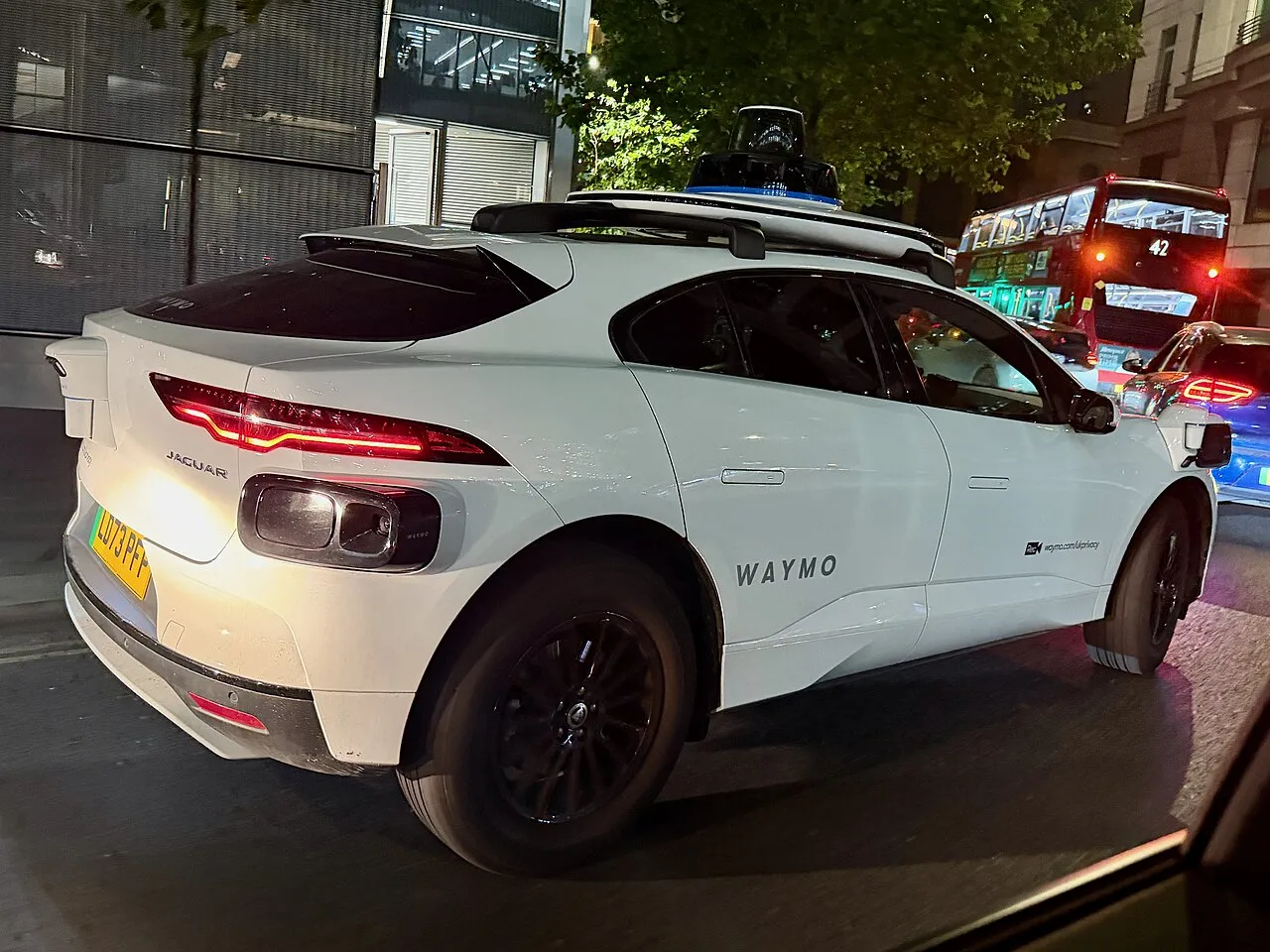
Waymo is rolling out its Ojai robotaxi, cheaper to produce and operate, to all users in Los Angeles, Phoenix, and San Francisco. Designed with Zeekr, the model marks a step toward a more scalable and profitable fleet.
Full deployment across three major cities
Since August 19, 2026, Waymo customers in these three cities can be assigned an Ojai for their rides. Eventually, they will be able to choose between the new model and the older Jaguar I-Pace, still in service. For now, Waymo has around 300 Ojai vehicles in its commercial fleet but plans to expand their presence to Denver, Las Vegas, and San Diego by the end of the year.
A vehicle designed for profitability and scale
The Ojai features Waymo’s sixth-generation autonomous driving system, modular and compatible with multiple vehicle types. It also includes a redesigned user interface and the Google AI assistant Gemini, accessible via an icon on the screen to control climate, find places, or get local information. The assistant operates independently of the driving system and remains inactive until the passenger activates it.
Under the hood, the Ojai is an electric minivan produced by Zeekr, a brand of Chinese group Geely. Waymo and Zeekr have collaborated since 2021 to develop this model, based on the SEA-M platform, designed for intensive use like robotaxis. The vehicles, assembled in China, arrive in the US without Chinese connected technology and are then equipped with Waymo’s autonomous system at its Arizona factory.
Controlled costs, despite tariffs
The goal was to reduce production and maintenance costs while ensuring durability suited for near-continuous use. However, US tariffs on vehicles imported from China increase the cost for each Ojai. Despite this, Waymo is accelerating: according to MoffettNathanson, 725 Ojai vehicles were imported in July 2026, and the company could import 5,000 by the end of the year, more than double its current Jaguar fleet.
 RecommendedGoogle’s Gemini 3.7 Flash: Faster, Cheaper, and More Powerful
Gradual rollout, despite recent incidents
Waymo has faced setbacks in recent months: after launching highway trips in November 2025 in select cities, the company had to suspend this service in May 2026 after vehicles entered closed construction zones. The service was restored in July. Additionally, Waymo received approval to operate in Sacramento and San Diego but remains absent from the city of Ojai, California, despite the model’s name.
The Ojai embodies Waymo’s strategy: shifting from a fleet of adapted vehicles to a solution designed from the ground up for robotaxis. Its mass deployment, if confirmed, could accelerate the adoption of autonomous services in the US.







Comments 0
Sign in to join the discussion.
Be the first to comment.