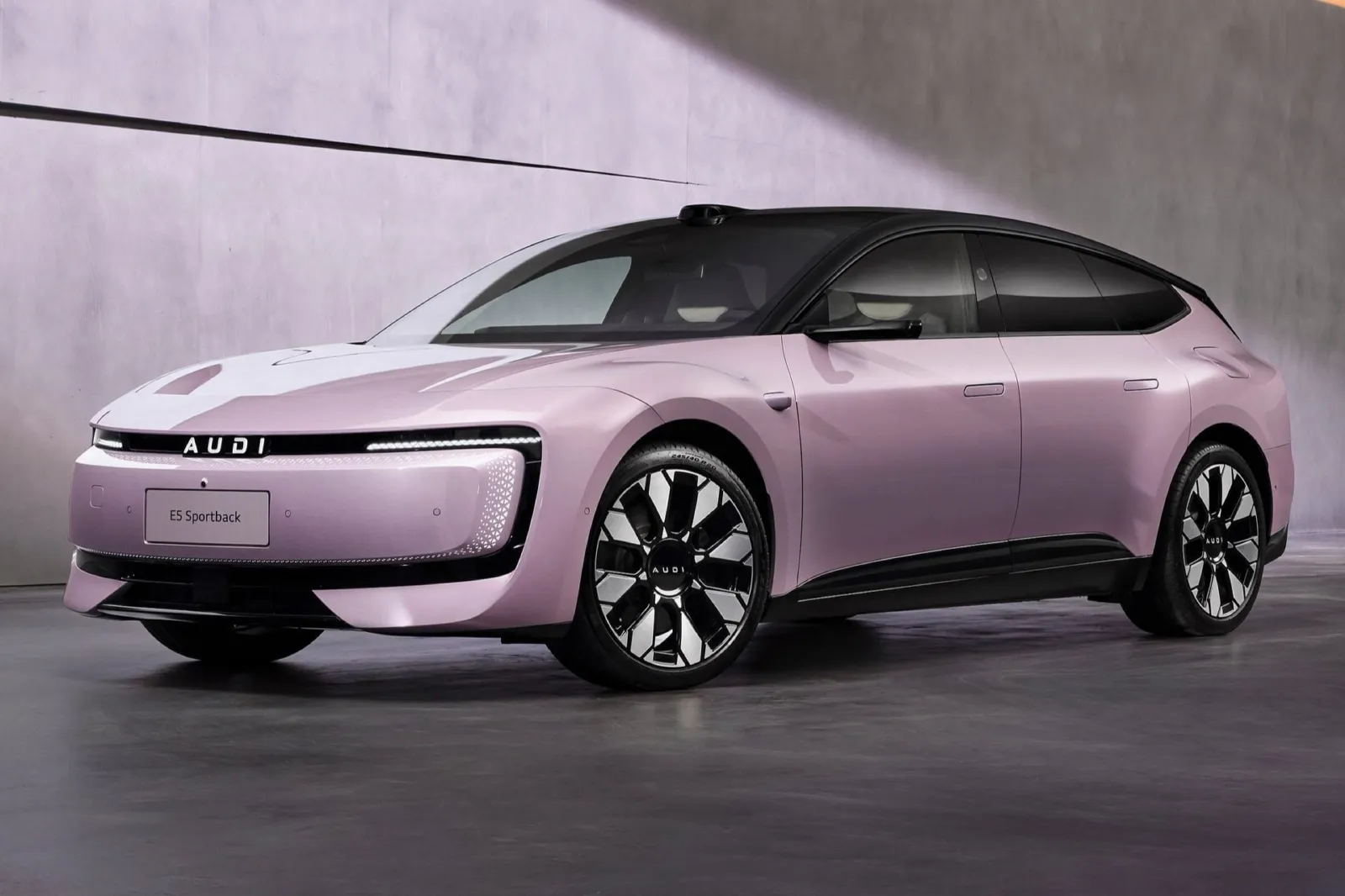
Volkswagen is selling its ID. AURA T6 electric crossover in China from €17,500, with high-end trims under €22,000. In Europe, the equivalent model costs nearly €10,000 more with fewer features.
An unbeatable Chinese price, premium trims
The German automaker has officially launched the ID. AURA T6, produced by its FAW-Volkswagen joint venture in China. The entry-level 540 Pro starts at €17,500 (converted from yuan). Higher trims — 660 Pro, 660 Max, and 660 Ultra — range from €19,300 to €21,900. The latter includes a LiDAR and assisted driving developed by Carizon, a joint venture between Volkswagen and Horizon Robotics.
At 4.81 m long, the crossover offers a 576-liter trunk (1,796 liters with seats folded) and a rear 170 kW (228 hp) motor, enabling a 0-100 km/h sprint in 7.2 seconds. Range varies between 540 and 660 km under China’s CLTC cycle — roughly 430 to 530 km under Europe’s WLTP standard. Two LFP batteries are available: 59.9 kWh and 77.5 kWh.
The cabin focuses on tech: a 15.6-inch central display, a 10.25-inch digital instrument cluster, a 25.8-inch AR head-up display, and a 4 nm chip delivering 20 TOPS. High-end versions add 18 speakers, heated, ventilated, and massaging front seats, plus a navigation system powered by the Journey 6H chip (420 TOPS).
In Europe, the same model costs more… and is less equipped
In France, Volkswagen’s most affordable electric SUV, the ID. Cross, starts at €27,995. For this price, customers get a smaller car (4.16 m), no LiDAR, a 37 kWh battery, and reduced equipment — nearly €10,000 more for fewer features than the Chinese ID. AURA T6.
A pricing strategy driven by China’s auto war
The Chinese pricing reflects fierce competition between local and foreign automakers. In July 2026, Volkswagen delivered 87,099 vehicles in China, a 40.3% year-on-year drop. To stay competitive, the group is relying on aggressive pricing and tech partnerships, such as its collaboration with XPeng to cut development costs.
The CEA electronic architecture, co-developed with XPeng in 18 months, reduces the number of control units by 30% compared to the MEB platform of older ID models. This optimization partly explains the low price of the Chinese model.
 RecommendedHyundai Ioniq 3 pricing hints at French launch vs Renault 5 E-Tech
Europe still lags on pricing
This differential treatment is nothing new. Volkswagen has already blocked imports of Chinese models into Europe, such as the ID.6 or AUDI E5 Sportback, whose prices attracted buyers despite high homologation and tax costs. In 2023, a Berlin dealer attempted to import around 20 ID.6 units before Volkswagen had them seized and destroyed by court order.
The message is clear: low prices are reserved for the Chinese market. In Europe, consumers will have to settle for pricier, less-equipped models — or wait for a potential price drop if local competition forces Volkswagen to adjust.
Comments 0
Sign in to join the discussion.
Be the first to comment.