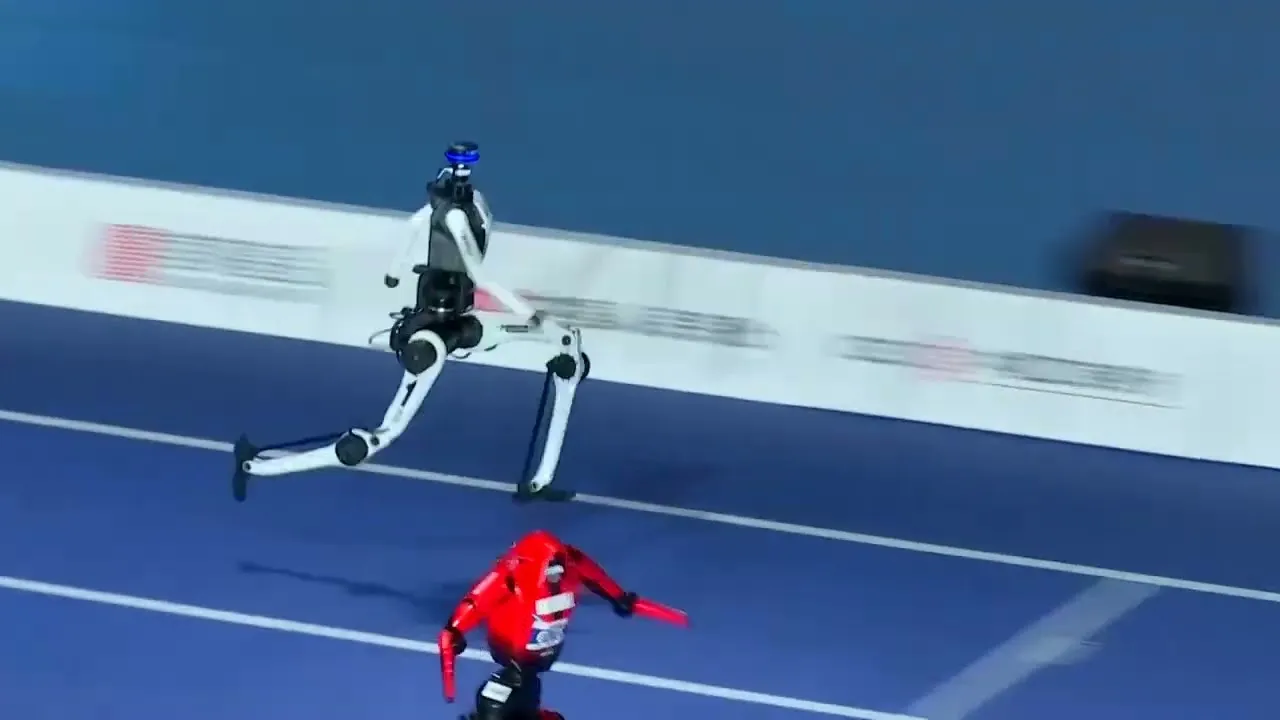
Chinese automakers are pouring billions into humanoid robots, with record funding rounds and concrete projects. The goal: diversify revenue as automotive margins shrink.
Billions for embodied AI
Xpeng’s robotics subsidiary raised over $900 million in August 2026, valuing the company at more than $6.3 billion. This funding round, led by IDG Capital with Tencent, Alibaba, and Gaorong Ventures, is touted as the largest ever in China’s embodied AI sector — systems where artificial intelligence is integrated into physical machines.
Xpeng founder He Xiaopeng and co-president Brian Gu personally injected $100 million into this round. Their bet: the Iron robot, designed for commercial deployment, could generate margins far higher than those in the automotive sector, deemed too low in the short term.
China’s auto industry pivots to robots
Xpeng isn’t alone. AiMOGA, Chery Automobile’s robotics division, is preparing an IPO. BYD unveiled Xiao Di, a humanoid, while Changan, GAC, Li Auto, SAIC, and Seres are developing their own models. These automakers are leveraging their industrial expertise to catch up with Tesla in AI.
“They have all the hardware to make it happen. The question is whether they can compete with Tesla on AI.” — Michael Dunne, CEO of Dunne InsightsTranslated from French
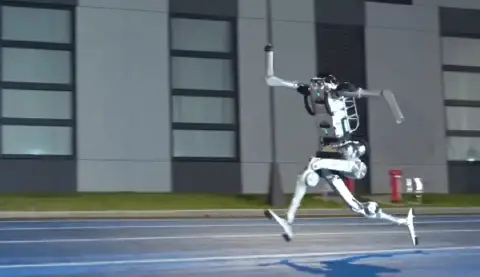 RecommendedChinese humanoid robot outruns Usain Bolt’s speed, but with caveats
A market still under construction
In 2025, nearly 90% of the 13,000 bipedal robots delivered worldwide came from China. Yet challenges remain: limited autonomy, high costs, and doubts about the real utility of the humanoid form. Spectacular demonstrations — robots performing martial arts or backflips — wow audiences, but industrial deployment remains marginal.
Experts note that replacing human jobs in the short term is unlikely, despite prototypes capable of folding laundry, working cash registers, or running faster than Usain Bolt. A Chinese model has already achieved this.
China is betting on embodied AI as a growth driver, but the shift from demonstration to practical use will take time. Automakers, accustomed to production lines, may well be the ones accelerating the transition.



Comments 0
Sign in to join the discussion.
Be the first to comment.