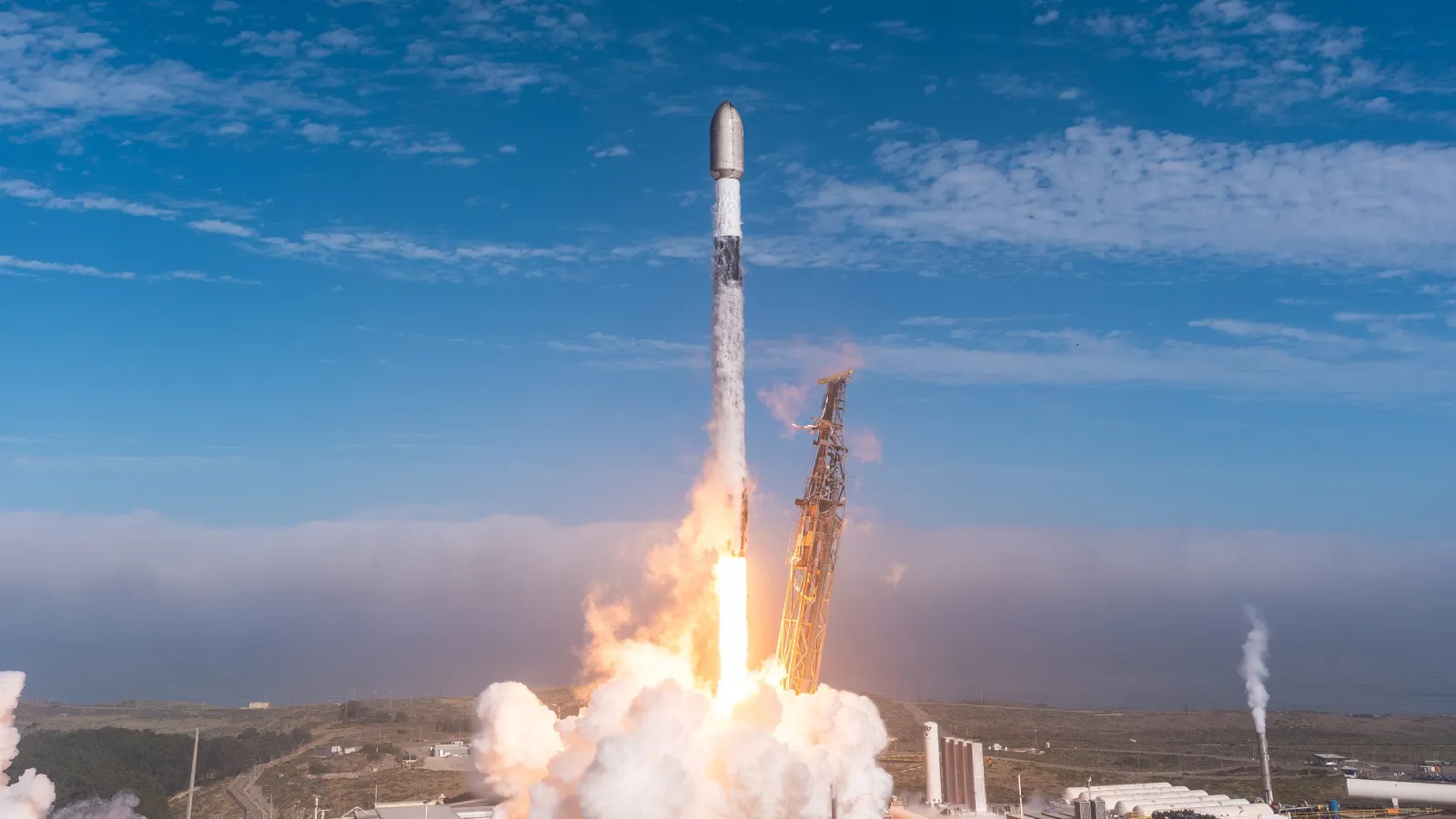
SpaceX confirms the planned end of Falcon 9: once Starship is operational at high frequency, the historic launcher will be gradually phased out. The transition is already underway, with flight bookings halted after 2028.
The timeline is taking shape
Elon Musk clarified the roadmap on August 22: as soon as Starship is capable of flying "multiple times a week," SpaceX will "gradually reduce activities related to Falcon." Behind the scenes, the company has already stopped reserving new launches for Falcon 9 beyond 2028. Production of certain parts for the non-reusable second stage has also been halted.
Falcon 9, the most reliable launcher in history with a 99.57% success rate over 694 flights, has already begun its decline on the West Coast. On August 25, its final flight from Florida marked the end of Starlink missions from Cape Canaveral: in the future, these launches will be handled by Starship from Vandenberg Space Force Base in California.
Starship shifts into high gear
On July 24, Starship’s 13th test flight marked a key milestone: the upper stage (Ship 40) achieved an intact splashdown in the Indian Ocean, despite damage (damaged nozzles, corrosion, and damaged flaps). Recovered on August 26 after a 17,000 km tow to Texas, it provides SpaceX with valuable data to improve the heat shield — a critical requirement for full reusability.
SpaceX is now targeting Starship’s first complete orbital mission, with an attempt to capture the second stage using the launch tower’s mechanical arms. Ultimately, the goal is 30 launches per day, or roughly 10,000 per year — a pace that justifies the construction of Starbase Louisiana, a $100 billion spaceport with 10 launch pads.
 RecommendedStarship’s 13th test flight deploys Starlink V3 satellites but remains partial
A legacy hard to match
With nearly 700 launches to its name, Falcon 9 remains the first orbital launcher to have landed and reflown. Only Russia’s Soyuz, in service since 1957, has more missions. But its successor, Starship, promises a far greater payload capacity and full reusability — if technical challenges are overcome.
SpaceX President Gwynne Shotwell confirmed that the pace of Falcon 9 flights will slow as Starship scales up. After a record 165 launches in 2025, the company expects 140 to 145 flights in 2026.
"When Starship is capable of flying multiple times a week, it will be time to gradually reduce activities related to Falcon." — Elon MuskTranslated from French
The transition is underway, but doubts remain: Starship must prove its reliability before 2028 for Falcon 9 to truly retire. In the meantime, SpaceX is already preparing for the future, with infrastructure tailored to its behemoth.
Reminder: SpaceX had already made headlines in late July with a lunar incident.
Sources
Numerama — Le Starship est sauvé : la fusée a enfin été extirpée de l’eau
Les Numériques — SpaceX : l’ultime Falcon 9 crée une méduse dans le ciel de New York
Clubic — L’arrivée de Starship devrait mettre à la retraite le Falcon 9
Clubic — SpaceX annonce Starbase Louisiane, le plus grand port spatial au monde






Comments 0
Sign in to join the discussion.
Be the first to comment.