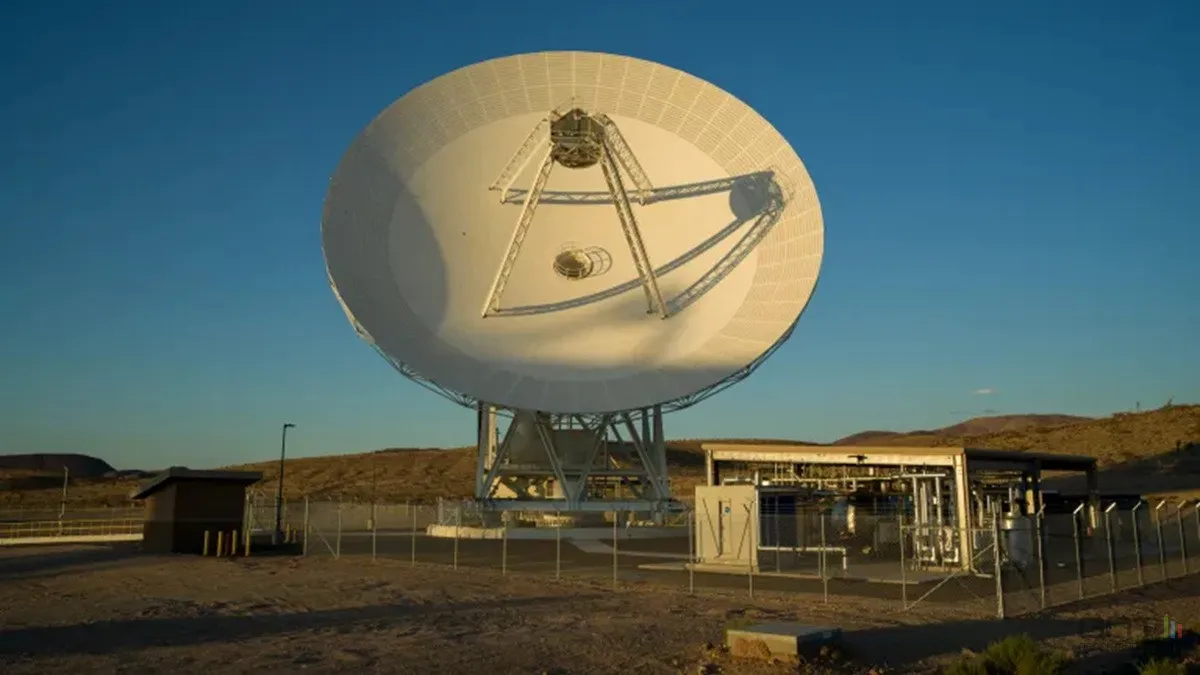
NASA has just commissioned DSS-23, a 34-meter antenna in Goldstone (California), to bolster its Deep Space Network. This critical network, essential for communicating with probes and rovers, is preparing for lunar and interplanetary exploration in the coming decades.
A new sentinel for the Deep Space Network
Since August 25, 2026, the Deep Space Station 23 (DSS-23) has been operational at the Goldstone complex near Barstow. With a diameter of 34 meters, it joins the Deep Space Network (DSN), managed by the Jet Propulsion Laboratory on behalf of NASA. This network tracks, commands, and receives data from distant space missions, such as Voyager 1 or the Chandra telescope.
DSS-23 is part of the Aperture Enhancement Project, launched in 2009 to modernize the DSN. The goal: add six 34-meter multi-frequency antennas, capable of handling multiple missions simultaneously across different radio bands. The final antenna of this type is set to be installed in Canberra (Australia) by 2029.
An architecture optimized for durability
Unlike the older 70-meter antennas, DSS-23 uses a beam-waveguide design: sensitive electronic equipment is housed in an underground, climate-controlled room rather than on the mobile structure. Signals captured by the 133-ton reflector are routed to this shelter via a mirror system. This approach simplifies maintenance and upgrades.
The antenna is already serving about 40 active missions, including Juno (Jupiter) and the Mars Reconnaissance Orbiter. Its versatility allows it to switch quickly between spacecraft, preventing network saturation. This is critical as Artemis missions to the Moon and robotic explorations of the solar system multiply.
 RecommendedNASA abandons Swift observatory rescue mission
Why it matters
The DSN is the nervous system of space exploration. Without it, probes become 'silent wrecks,' as NASA puts it. DSS-23 strengthens the robustness of interplanetary communications, essential for missions like Psyche (en route to a metal asteroid) or future crewed Moon landings.
After a SpaceX rocket impact on the Moon, NASA is accelerating its infrastructure to secure future missions. DSS-23 is a concrete example: less spectacular than a rover, but just as vital.




Comments 0
Sign in to join the discussion.
Be the first to comment.