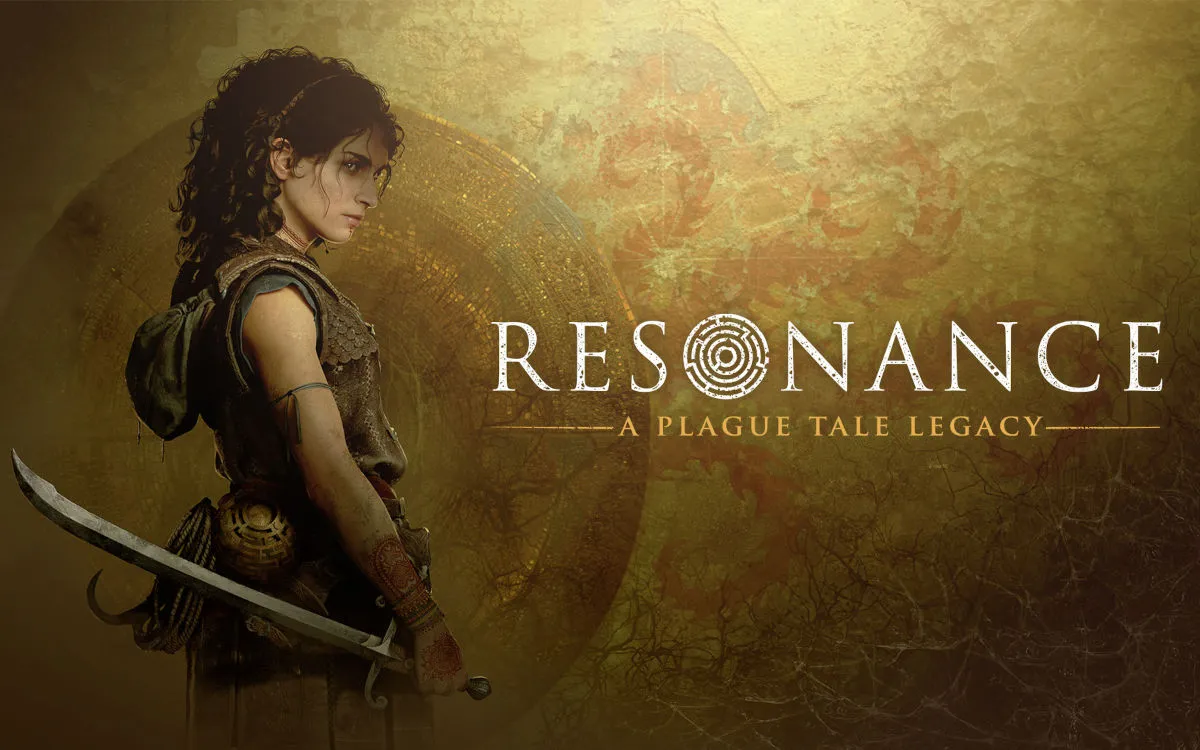
Resonance: A Plague Tale Legacy swaps medieval oppression for a treasure hunt in ancient Greece, with Sophia as the heroine. The game impresses with its art direction and soundtrack but struggles to stand out from references like Uncharted or Assassin’s Creed, to the point of drowning in them.
A spin-off that changes course but not the formula
Asobo Studio leaves Amicia and Hugo behind for Sophia, the pirate encountered in A Plague Tale: Requiem. The Bordeaux-based studio goes back fifteen years and moves the action to Crete, on the island of the Minotaur. Gone is the medieval survival-horror: enter the spectacular action-adventure, with melee combat, environmental puzzles, and freer exploration. Adult and agile, Sophia embodies this break. She fights with a blade, climbs, jumps, and faces enemies without Amicia’s sling or alchemy.
The game aims for a twenty-hour playtime, a strong point for a title of this scale. But this ambition comes at the cost of overly visible borrowings. Combat sequences evoke Uncharted or Assassin’s Creed, down to the heavy armor phases inspired by Ubisoft’s series. Puzzles, often based on light or simple mechanisms, lack variety. Worse: some sequences, like Theseus’ visions, disrupt the pacing with their weight.
A visual and audio identity that saves the adventure
Resonance shines in its execution. The island of the Minotaur’s settings, from light-drenched temples to mysterious caves, are stunning. Venice, where the adventure begins, offers shots worthy of realistic paintings. Unreal Engine 5 works wonders, even if the game struggles to maintain 60 frames per second in Performance mode on PS5 Pro. The soundtrack, composed by Olivier Derivière, perfectly accompanies every moment, from contemplative phases to tense scenes.
Sophia, the central character, carries the narrative through her vulnerability. She doubts, cries, tires, and her narrative evolution partly compensates for the RPG’s lack of depth. The game also avoids the pitfalls of intrusive assistance: allies do not reveal puzzle solutions without the player’s consent, a rare and welcome attention.
 RecommendedThe Sinking City 2: A 1920s Resident Evil Without the Soul
A game caught between two eras and two genres
The predictable story alternates between Sophia’s and Theseus’ arcs, with well-executed reveals but no revolution. The forgettable side characters fail to inspire empathy. Combat, though well-handled, suffers from stiffness: overly long animations, a finicky camera, and microsecond pauses after taking a hit that break the flow. Sequence variety dwindles in the final third, and a sense of repetition sets in.
Resonance regains its identity in its second half, as the atmosphere turns oppressive and tension rises. But it’s too late to erase the feeling of a game that lost sight of what made the franchise strong: vulnerability, terror, and the uniqueness of its universe. The title remains a good adventure game, but it too often feels like playing something other than a A Plague Tale.
Asobo Studio takes a risk by changing protagonist and formula. The gamble is half-successful: Resonance delivers an immersive adventure, driven by exceptional art direction and a standout soundtrack. But by copying too many genre blockbuster codes, the game loses what made it original. A Greek tragedy, in short: that of a spin-off that forgets its roots.
Sources
Journal du Geek — Test Resonance : A Plague Tale Legacy : bon jeu mais mauvais spin-off
Canard PC — Resonance : A Plague Tale Legacy
PhonAndroid — Resonance: A Plague Tale Legacy est une tragédie grecque made in France
IGN France — Les malheurs de Sophia au cœur de notre test de Resonance : A Plague Tale Legacy


Comments 0
Sign in to join the discussion.
Be the first to comment.